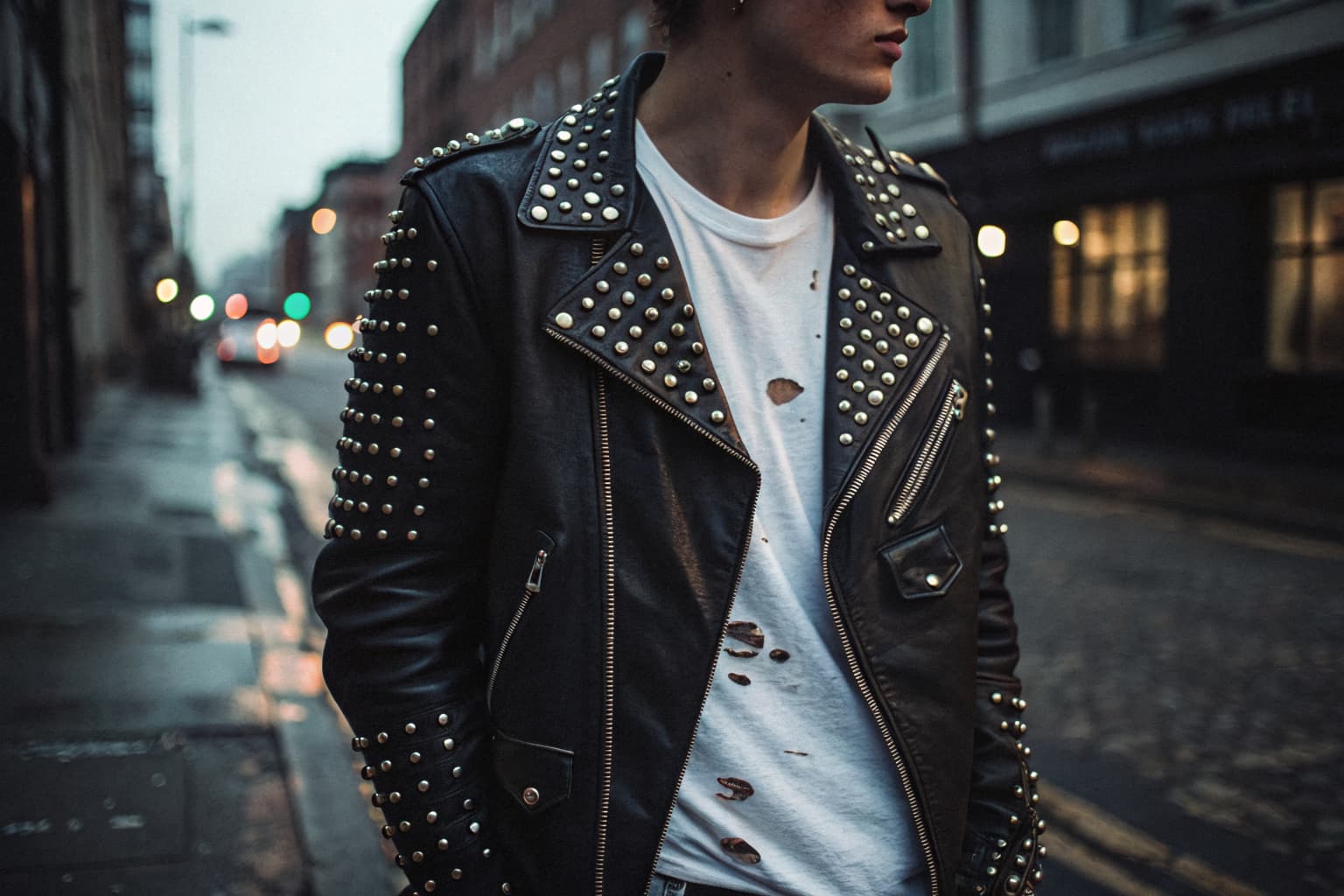
Punk fashion started in London in 1974, in a shop at 430 King's Road run by Malcolm McLaren and Vivienne Westwood. Punk fashion was built from cheap, angry, homemade pieces, ripped t-shirts, safety pins, bondage trousers, and leather jackets covered in paint. Punk style was never about looking rich. It was about looking like you did it yourself.
So where did the safety pins actually come from? Who decided that ripped meant something? And why does a punk jacket from 1977 still cost more than a brand new one?
Here is the whole story, decade by decade, and what it means for how you dress now.
Who Created Punk Fashion?
Two people get most of the credit: Malcolm McLaren and designer Vivienne Westwood.
Their shop at 430 King's Road changed its name almost as often as the music changed. It went like this:
- Let It Rock (1971–1973) — Teddy Boys gear. Drape jackets, skinny trousers, thick-soled creepers. Not punk yet.
- Too Fast to Live, Too Young to Die (1973–1974) — chains, leather, sleeveless t-shirts with rude slogans
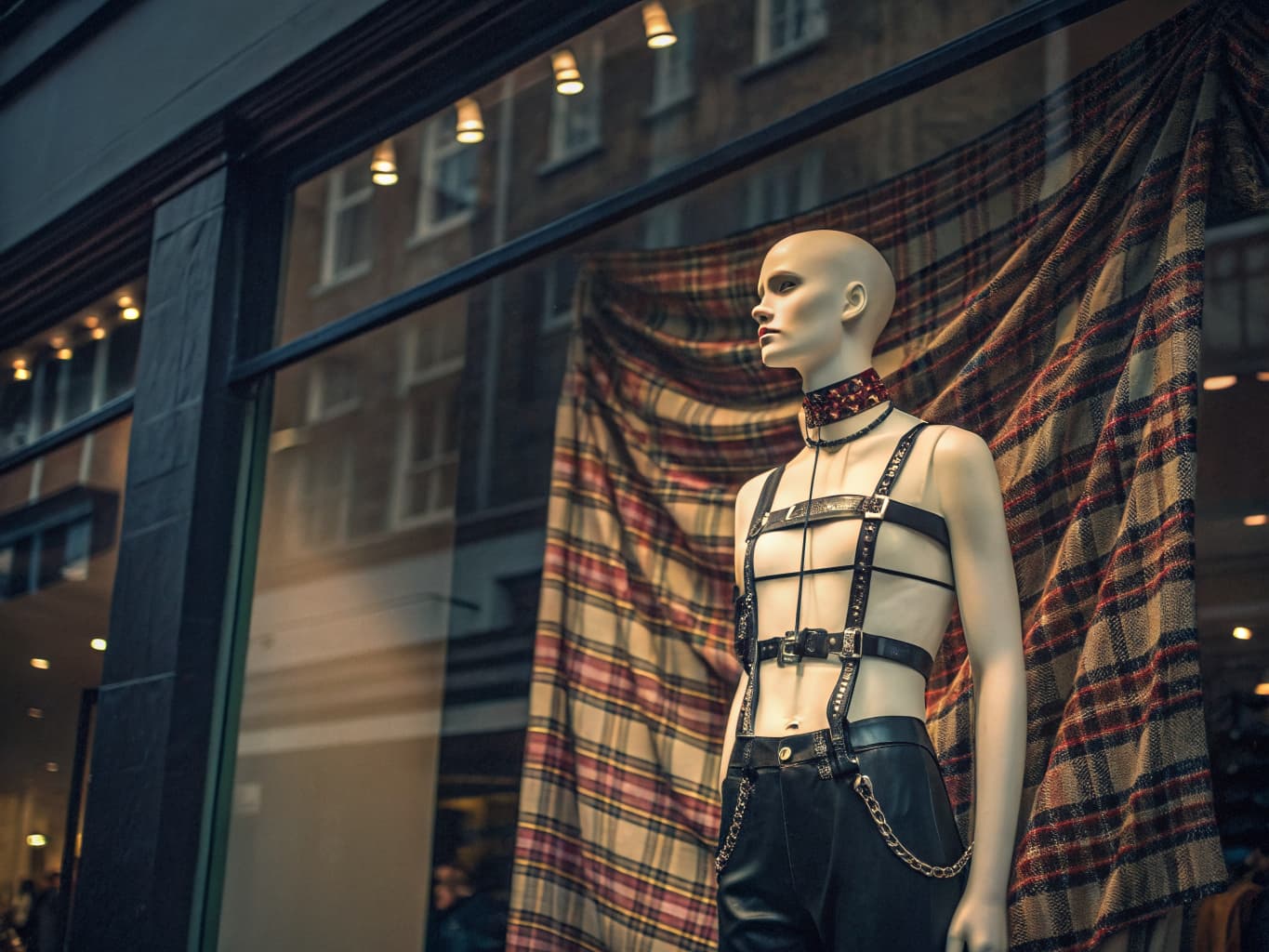
- SEX (1974–1976) — fetish and bondage wear sold as street clothes. This is where punk fashion really starts
- Seditionaries (1976–1980) — the shop's punk peak, subtitled “Clothes for Heroes”
- Worlds End (1980–today) — still there, still Westwood's
The jump from Teddy Boys to bondage gear is the whole story in one shop. McLaren and Westwood took clothes that were considered shameful and put them in a window on a public street. That was the point. For a closer look at how Westwood's designs drew on the past even while shocking the present, the V&A's retrospective on Vivienne Westwood covers the bondage look and the King's Road years in detail.
Their staff mattered too. Jordan, born Pamela Rooke, worked the floor and dressed like a walking advertisement. Glen Matlock, soon to play bass in the Sex Pistols, worked Saturdays.
What Did Early Punks Actually Wear?
Punk emerged from people with no money and a lot of nerve. That shaped everything.
The 1970s punk look was built from:
- Ripped jeans and torn trousers, often held together with gold safety pins
- Plain t-shirts customised with paint, bleach, and stencils
- Black leather jackets, usually secondhand, then painted with band logos
- Bondage trousers with straps between the knees
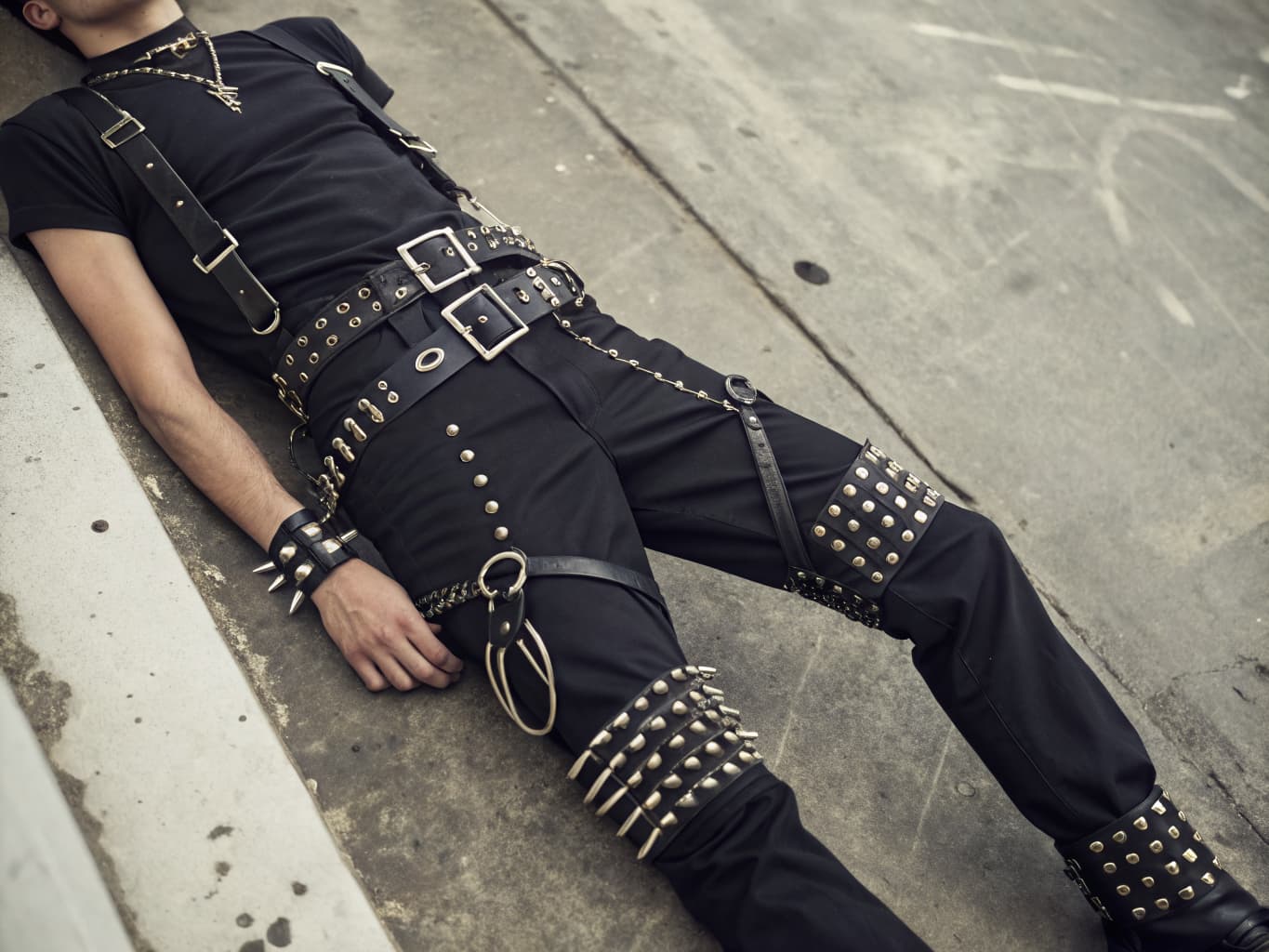
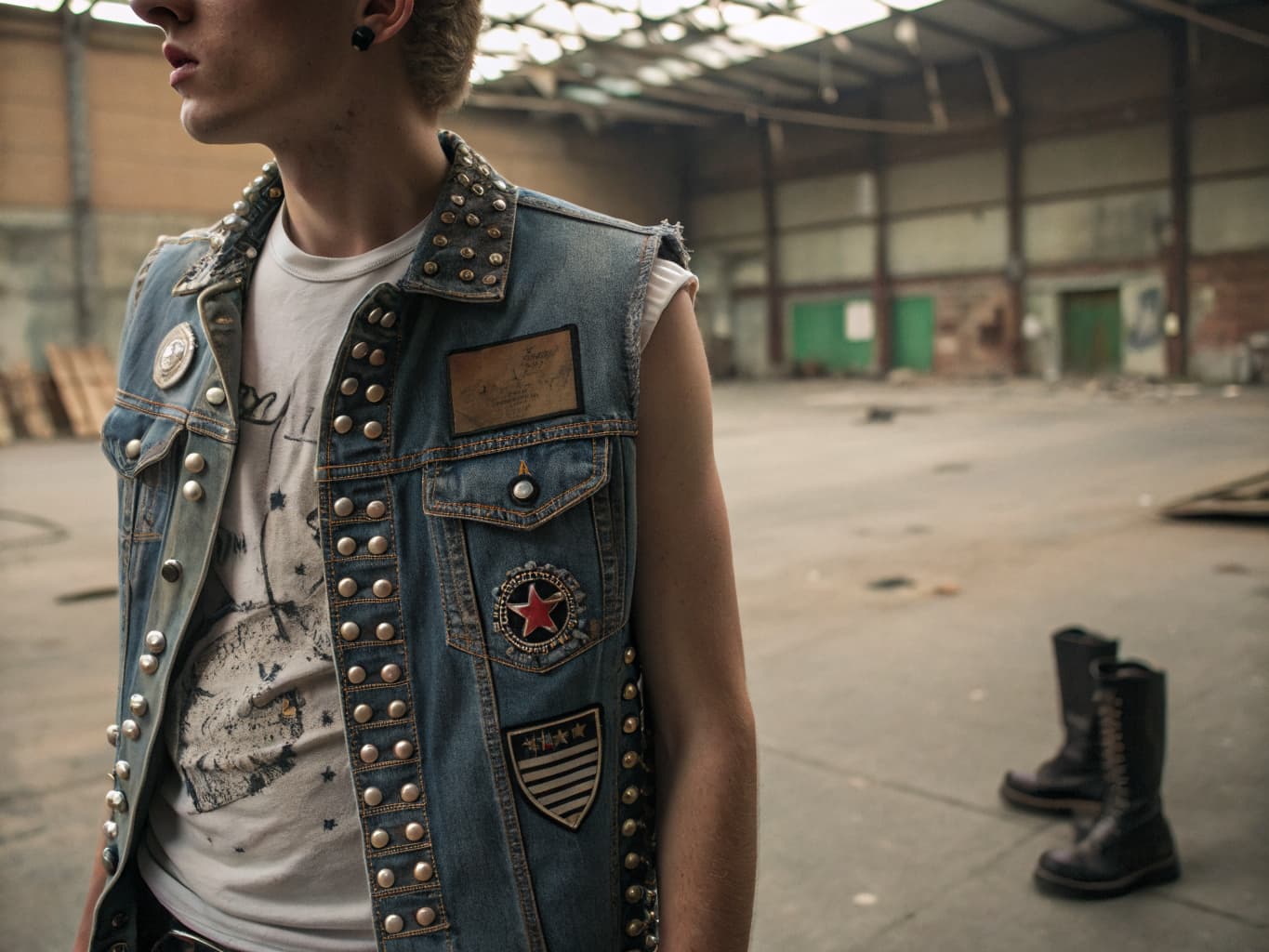
- Studded belts, dog collars, and metal studs hammered in at home
- Combat boots and Doc Martens, borrowed from working class work wear
- Spiky hair in bright colors, plus heavy eyeliner on everyone
Two things drove all of it. The first was money, nobody had any. The second was anti fashion. Punk style deliberately used everyday objects the fashion world would never touch. Safety pins. Bin liners. Razor blades on a chain.
That anti fashion streak is the part people miss. This was not a fashion style anyone sat down and designed. It grew out of clothing people already owned, cut up in a bedroom, and it borrowed inspiration from glam rock, Teddy Boys, and workwear all at once.
That is why punk fashion still reads as honest. It was never designed to look expensive.
The New York Side of the Story
London gets the headlines, but New York was running in parallel and got there first in some ways.
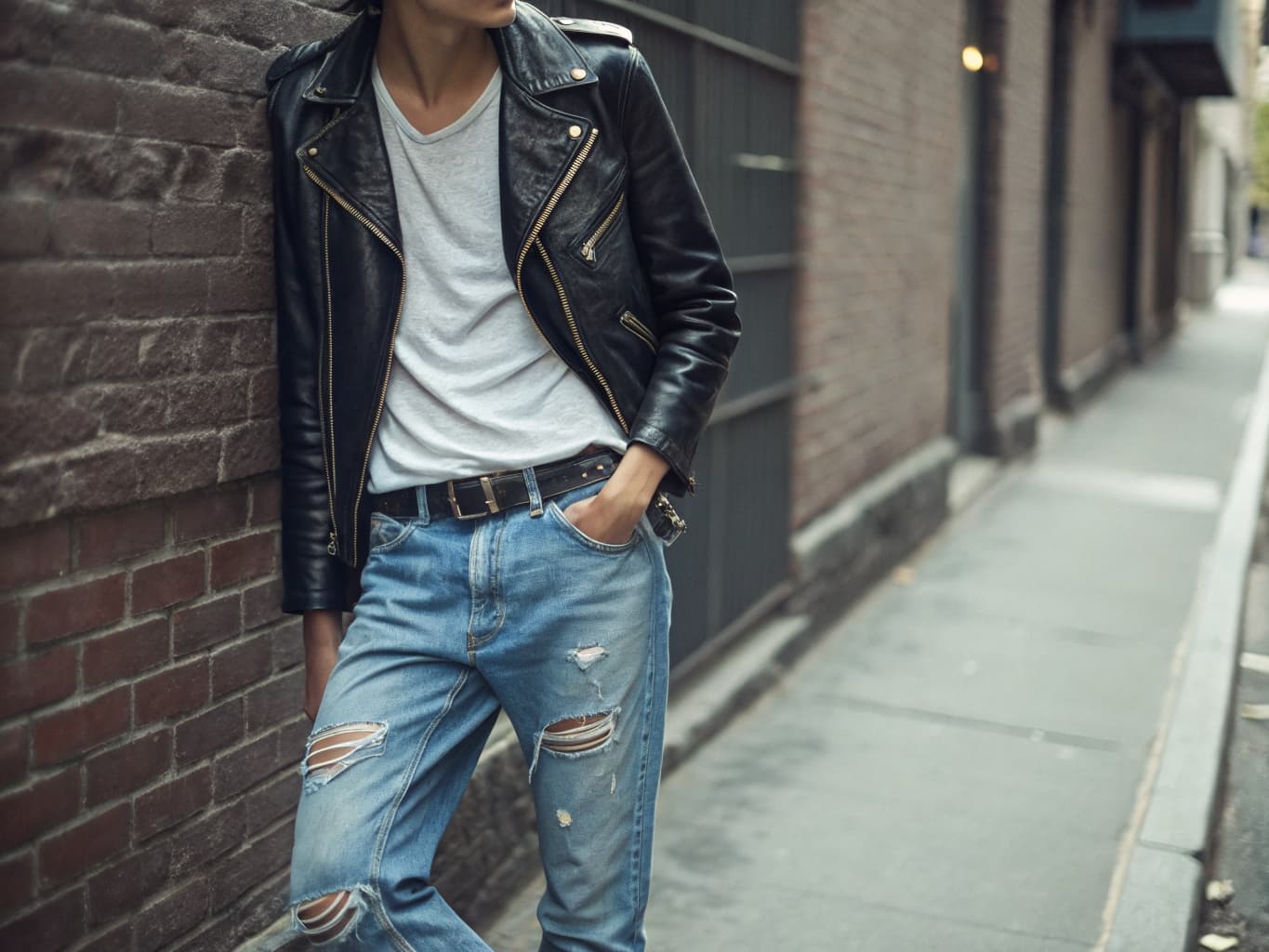
Richard Hell is widely credited with the torn shirt held together by safety pins. McLaren saw Hell play in New York in 1975 and took the idea home. The Ramones brought the other half: torn jeans, sneakers, and black leather jackets worn like a uniform.
Both cities had bands first and clothing second. The punk rock movement did not start with a designer. It started with bands who could not afford stage clothes, so they wore what they owned.
The difference between the two cities is still visible in punk style today.
| London Punk | New York Punk | |
|---|---|---|
| Feel | Theatrical, shocking, styled | Plain, tough, uniform |
| Key pieces | Bondage straps, tartan, mohair | Torn denim, leather jackets, band tees |
| Hair | Bright colors, big hair, liberty spikes | Messy hair, long fringes |
| Attitude | Dressed to start a fight | Dressed to not care |
British punk was a costume with a message. American punk was a rejection of costume. Both are punk fashion. Neither style is more real, and most bands ended up borrowing from both.
The 1980s: Punk Splits Into Pieces
By 1980 the punk movement had broken into scenes, and each scene dressed differently.
Hardcore punk stripped it back. Hardcore punk fashion was jeans, plain t-shirts, sneakers, and a shaved head. Clothes you could sweat in. If 1977 was theatre, 1982 was a gym.
Crust punks went the other way. Crust punk fans layered filthy black denim and patches until the original garment vanished. Bullet belts, matted hair, boots held together with tape. Crust punks were the most extreme thing the punk scene produced, and the look survives almost unchanged today.
Street punk and Oi! kept the spectacle. Liberty spikes, studded leather jackets, tight leather pants, and mohawk hairstyles that took an hour and a can of hairspray.
Gothic punk and horror punk drifted darker. More black clothing, more lace, leather skirts, and makeup borrowed from old horror films. This is where punk and goth start sharing a closet, and they never really stopped.
Many punks moved between these scenes rather than picking one. The bands overlapped, the shops overlapped, and other subcultures, skinhead, goth, metal, traded pieces back and forth the whole time.
Punk elements were also getting political. Patches carried political statements, not just band logos. Anarcho-punk made the jacket a noticeboard.
Melrose Avenue: How Punk Fashion Reached America's Mall Kids
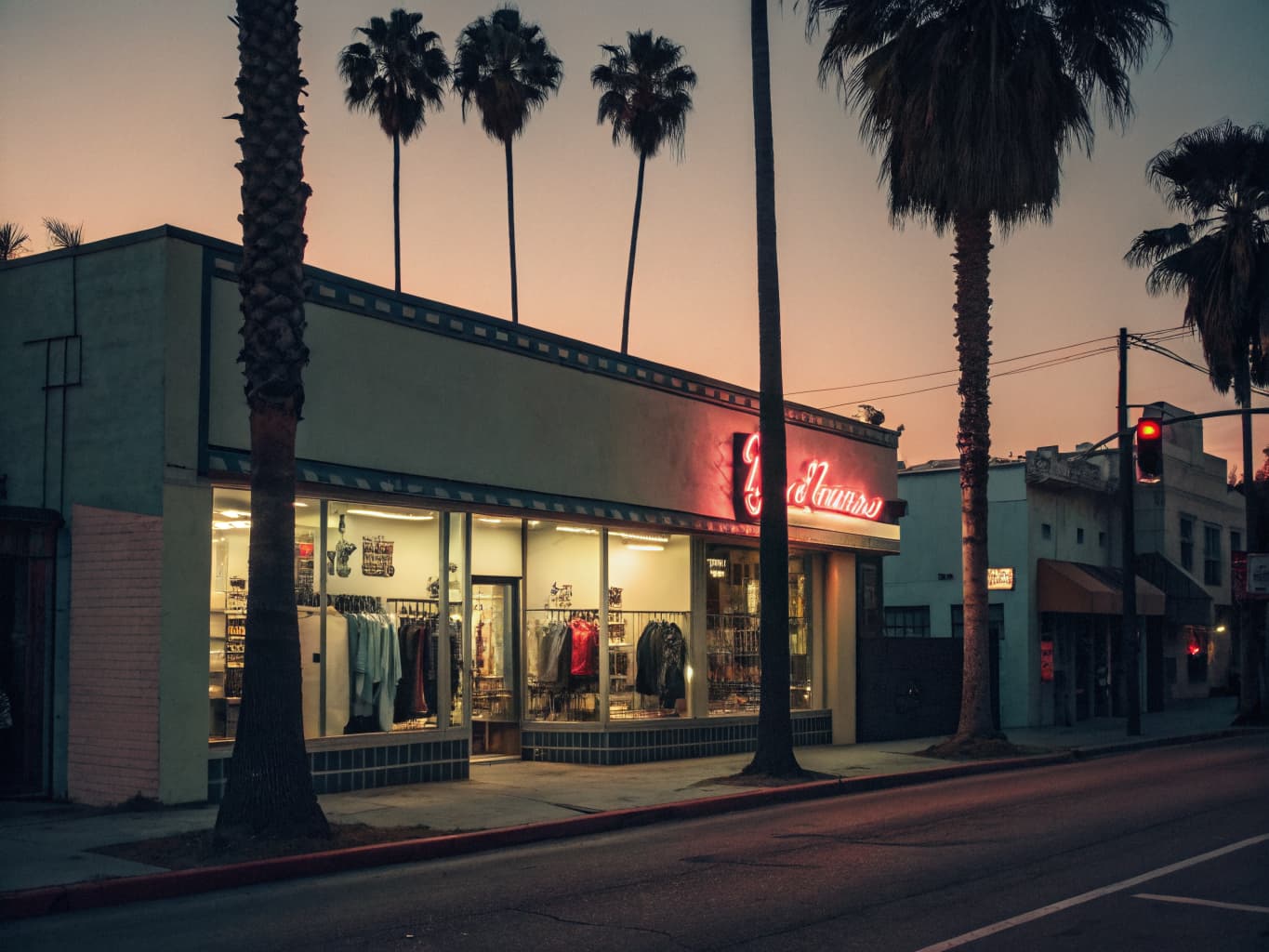
Punk fashion needed shops, and in Los Angeles the address was Melrose Avenue. A scene can invent a style, but somebody has to sell it before it spreads.
Retail Slut opened on Melrose in 1983, founded by Helen O'Neill. It sold punk, goth, and underground clothing to a scene that had nowhere else to go, and it moved four times along the same avenue as it grew.
The customer list is the part people do not believe. Slash bought his first top hat there. Michael Jackson bought the bondage accessories that ended up on the cover of BAD. Billy Idol, Cyndi Lauper, Axl Rose, and Nina Hagen were all regulars. Andy Warhol put one of the store's pieces in his 1985 book America.
The store closed on 31 March 2003, and for a long time that looked like the end of it. Lethal Amounts revived it for a pop-up in 2021. Retail Slut is open again now, same name, same scene, same reason it existed in the first place.
That is the real story of punk fashion in America: not a runway, but a handful of independent shops that let kids buy the look without making it themselves.
The 1990s: Punk Goes to the Mall
The 1990s is where punk fashion got complicated.
Grunge borrowed the flannel and the boots and dropped the anger. Pop punk fashion took the torn denim, added skater styles, and put them on MTV. Band hoodies and hooded sweatshirts replaced the leather jacket as the default. Denim jackets came back, this time bought pre-distressed. Spiked hair softened into something you could wear to school.
The punk movement had spent twenty years being unsellable. Now punk music was on the radio and the clothing was on a rack, in sizes, in a shop with a security tag.
For the first time you could buy a punk look in a shopping centre. Mainstream culture had absorbed it.
Old punks called this the death of punk. They were half right. The clothes went soft. But the mall was also how millions of kids found the bands, and plenty of them followed the music backwards to the real thing, and to the harder style it came from.
| Decade | The Look | Driven By |
|---|---|---|
| Early 1970s | Teddy Boys revival, glam rock, creepers | McLaren and Westwood, Let It Rock |
| 1976–1979 | Bondage gear, safety pins, ripped t-shirts | Sex Pistols, Seditionaries, Johnny Rotten |
| 1980–1989 | Hardcore plainness, crust patches, liberty spikes | Scene splits, independent shops |
| 1990–1999 | Flannel, band tees, skate shoes, big hair fading out | Grunge, pop punk, MTV |
| 2000s | Studded belts, black skinny jeans, emo influence | Warped Tour, mall retail |
| Today | Vintage revival, mixed subcultures, thrift-first | Social video, secondhand apps |
What Punk Style Looks Like Today
Modern punk fashion is a mix, and that is not a criticism. It pulls its fashion style from every decade at once.
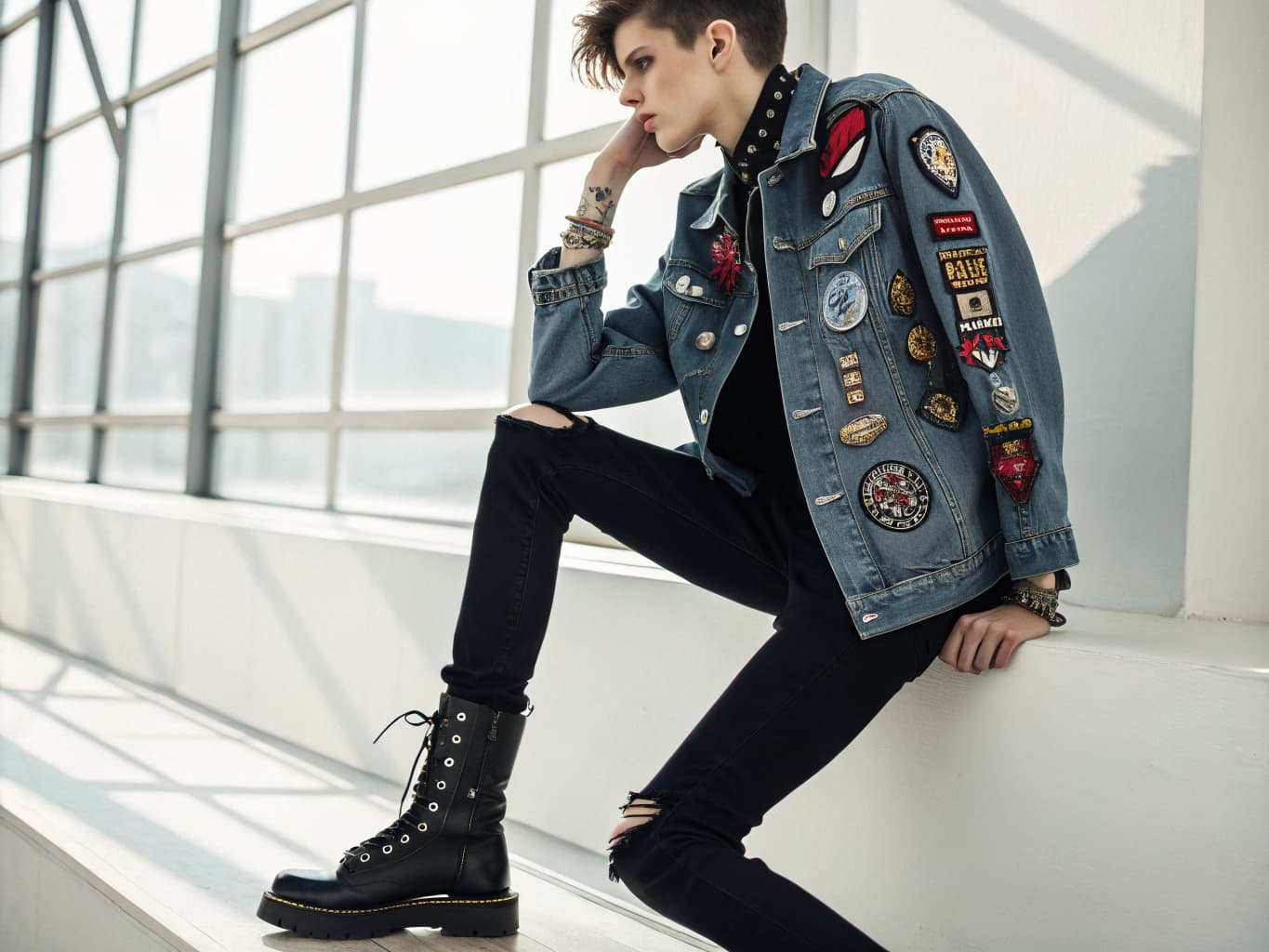
Most people now build from vintage punk pieces and thrifted basics rather than one shop's house style. A pair of combat boots. Black skinny jeans or ripped jeans. Band t-shirts, either original or reissued. One leather jacket, customised over years.
The rules that survived from 1977 are simple:
- Buy it secondhand where you can. Punk was thrift-first before thrift was a trend.
- Customise it yourself. Patches, paint, studs. A jacket nobody else owns beats a jacket everyone can order.
- Wear it out. Punk gear is supposed to age badly and look better for it.
- Say something. Band logos, political statements, or a joke, but say something.
- Ignore the gatekeepers. Every generation of punks has been told they missed the real thing.
High fashion still raids this closet every few years. Vivienne Westwood went from a King's Road shop to global runways, and designers keep taking inspiration from the safety pin. That is fine. The original was never for sale to begin with.
The honest version: punk style won. You can see its clothing on a runway, in a school corridor, and on a stage on the same day. What it lost along the way was the ability to shock anybody.
How to Wear Punk Without Looking Like a Costume
The most common mistake is buying the full outfit at once. It reads as fancy dress because it is.
Start with one real piece. A jacket, a pair of boots, a belt. Wear it with clothes you already own. Punk fashion has always been assembled, never bought in one go. Add the next thing when the first one stops feeling like a costume.
Different styles suit different people, and mixing punk elements with goth, grunge, or plain streetwear is normal. Every fashion rule punk ever had was made to be broken. Nobody serious is checking your credentials.
If you want the pieces, start with goth and punk basics, or go straight to bondage pants if you want the 1977 silhouette. For footwear, the black platform boots range covers both the goth and street punk side.
Want to build it yourself the way early punks did? The DIY punk guide walks through studs, patches, and paint. If you would rather be told what to buy first, read the punk style guide. And if punk keeps pulling you toward the darker end, the goth subgenre style guide explains where one ends and the other begins.
Where Retail Slut Fits Into This
Full disclosure, since it matters: we are the shop in that Melrose section.
Founded 1983. Closed 2003. Open again now, run on the same idea it started with, stock the real pieces, not the costume-shop version, and sell them to the people who actually wear them.
What that looks like today:
- Goth and punk clothing, the main floor, from black basics through to the loud end
- Bondage pants — the 1977 silhouette, straps and all
- Gothic platform boots and black platform boots — the one part of an outfit worth spending real money on
- Men's goth clothing — the section most shops still treat as an afterthought
We are not going to pretend a website is the same as a room on Melrose with a queue down the block. It is not. What carries over is the standard.
The longer version of the store's own story lives on the Melrose page.
Questions People Actually Ask
Who created punk fashion?
Malcolm McLaren and Vivienne Westwood get most of the credit for shaping it into a sellable look at 430 King's Road from 1974. But the raw ideas came from the street and from New York, Richard Hell is widely credited with the safety-pinned torn shirt that McLaren saw in 1975 and carried back to London. Punk fashion had no single inventor. It had a shop that packaged it.
Where did punk fashion originate?
Both London and New York, at almost the same time, for different reasons. New York punk grew out of the mid-1970s club scene around bands like the Ramones and Television, and its look was plain and tough. London punk arrived with the Sex Pistols and was far more theatrical. The London version travelled better because it was designed to shock photographers.
Was punk a style in the 70s, or just music?
It was both, and the clothes came almost immediately. Punk emerged as music in 1974 and 1975, and by 1976 the punk look was already recognisable enough to appear in newspapers. The two were never separate. Bands sold the clothes, shops sold the records, and the punk rock movement used both to say the same thing.
What defined 80s punk fashion?
Fragmentation. The 1980s is when one punk scene became many. Hardcore punk went plain and functional. Crust punks went heavier and dirtier. Street punk went taller and louder with liberty spikes and studs. Gothic punk went darker. If you see a photo from 1978, you can usually name the scene. From 1985, you have to look closer.
Is punk older than goth?
Yes, but only just. Punk came first in the mid-1970s, and goth grew directly out of it around 1979 to 1981 as bands slowed the tempo and darkened the mood. That is why goth and punk share so much clothing, the leather, the boots, the black. Goth is punk's younger sibling, not a separate family.
What do punks usually wear now?
Mostly the same core pieces, sourced differently. Combat boots, black or ripped jeans, band t-shirts, and a customised jacket. The big change is where it comes from, thrift stores, secondhand apps, and small independent brands rather than one famous shop. Modern punk fashion is less uniform and more personal than it was in 1977.
Is it disrespectful to wear punk clothes if I am not in the scene?
No. Wearing the clothes is how most people find the music and the history. What people react badly to is treating it as a costume for one night and calling it a day. Learn a couple of the bands. Buy from small shops. That is genuinely all anyone asks.
A note on sources. Shop dates for 430 King's Road and the Retail Slut store history are drawn from published records rather than memory. Where a claim is contested, like who first pinned a torn shirt, this piece says “widely credited” instead of picking a winner.
Punk fashion has been declared dead roughly once a decade since 1978. It keeps not dying, because the thing underneath it was never really about clothes. We shut for twenty years and the scene was still here when we got back. That is the whole point of the story.